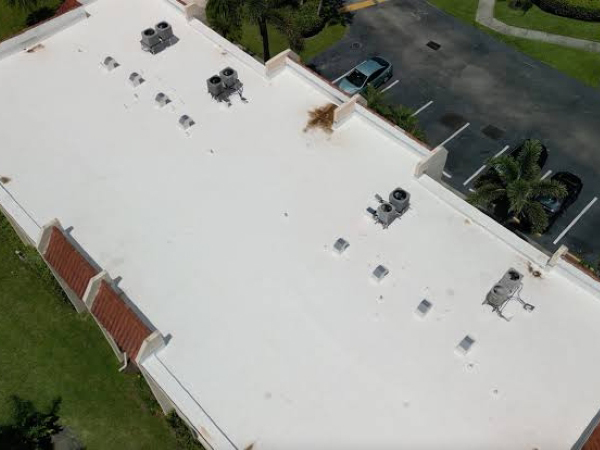
Bellevue, NE has a substantial mix of commercial and industrial properties, influenced in part by the area’s proximity to Offutt Air Force Base. Many of these buildings use flat or low-slope roofs that require dependable membrane systems designed for large roof surfaces. TPO roofing provides commercial properties with a single-ply membrane that combines heat-welded seams, a reflective surface, and straightforward maintenance requirements.
Call Hoppe Roofing at (855) 472-4932 for TPO roofing in Bellevue, NE.
How the Membrane System Works
TPO stands for thermoplastic polyolefin, a flexible roofing membrane commonly installed on commercial flat and low-slope roofs. The material is manufactured in sheets that can be rolled out across large roof areas and joined together during installation.
A TPO roof is typically installed over insulation and other components that make up the complete roofing assembly. Depending on the building and project requirements, the membrane can be attached using different approved methods. Once positioned, individual sheets are joined to create a continuous weather-resistant surface.
TPO has become a common commercial roofing choice because it combines relatively simple membrane construction with installation techniques suited to expansive roof areas. Warehouses, retail properties, offices, industrial facilities, and other commercial buildings can all be candidates depending on roof design and existing conditions.
Heat-Welded Seams Improve Performance

One of the defining characteristics of TPO is the way membrane sheets are joined. Instead of depending solely on adhesives at field seams, TPO uses hot air welding to fuse overlapping membrane sections together.
During installation, specialized equipment heats the surfaces where two sheets overlap. The softened material is pressed together and cools into a bonded seam. Proper welding creates a connection that becomes an integrated part of the membrane system.
Seam quality matters because joints are potential areas for water intrusion on any membrane roof. Correct temperatures, equipment settings, surface preparation, and installation technique all influence the finished weld.
The welded seam design also makes professional installation especially important. Contractors need to check completed seams and verify that they have formed correctly before the roofing project is considered complete.
Reflective Surfaces and Building Temperatures
TPO membranes are commonly available with white or light-colored surfaces. These surfaces reflect a portion of the sunlight that would otherwise be absorbed by the roof.
A darker roof can become significantly warmer under direct summer sun. By reflecting more solar energy, a light TPO surface can reduce heat buildup at the roof level. This may help decrease the amount of heat transferred toward the conditioned portions of a commercial building during warm weather.
Roof color alone does not determine a building’s energy performance. Insulation levels, HVAC equipment, building design, air sealing, and occupancy patterns also affect heating and cooling demands. Still, reflectivity can be a useful characteristic for commercial buildings with large roof surfaces exposed to direct sunlight.
Maintenance Supports Service Life
A TPO roof requires periodic attention to reach its expected service life. Routine inspections allow property managers to identify developing conditions before they affect larger areas of the membrane.
Inspections generally include checking seams, flashing, roof edges, penetrations, drains, and the exposed membrane. Rooftop equipment and areas with regular foot traffic also deserve attention because maintenance activities can expose the membrane to punctures or other physical damage.
Drainage should remain clear so rainwater and melting snow can leave the roof as intended. Leaves, dirt, and other debris can restrict drains and contribute to standing water.
TPO roofs commonly provide years of service when correctly installed and maintained, but actual lifespan varies according to membrane thickness, installation quality, weather exposure, rooftop activity, drainage, and maintenance history. Service life and routine maintenance are important considerations for Bellevue property managers evaluating TPO.
Evaluate the System for Your Property
TPO combines a flexible single-ply membrane with heat-welded seams and a reflective exposed surface. Understanding how these characteristics work helps building owners evaluate whether the system fits their commercial property’s roof design and operating needs.
For TPO roofing in Bellevue, NE, contact Hoppe Roofing at (855) 472-4932 today.
FAQ
How long does a TPO roof last on a commercial building in Nebraska?
Many professionally installed and maintained TPO systems can provide approximately 20 to 30 years of service. Actual longevity depends on installation, membrane specifications, weather exposure, maintenance, drainage, and rooftop activity.
How does TPO compare with EPDM roofing?
TPO is a thermoplastic membrane with heat-welded seams and is commonly light-colored. EPDM is a synthetic rubber membrane that is commonly black and typically uses adhesive or tape at seams. Both can perform well when properly specified and maintained.
Should a TPO roof be inspected after severe weather?
Yes. An additional inspection after hail, strong winds, or other significant weather can identify punctures, displaced components, flashing concerns, or other conditions that may not be visible from inside the building.