For a commercial building in Cedar Rapids, deciding between roof coating and roof replacement should start with documented roof conditions, not a promised return or a simple age threshold. Moisture, substrate condition, drainage, membrane compatibility, repair history, building operations, and the scope needed to correct existing defects all affect whether restoration or replacement is the stronger option. Hoppe Roofing can be reached at (855) 472-4932 to discuss a commercial roofing assessment.
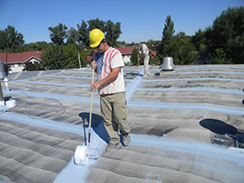
Roof Coating vs Replacement: Choosing the Right Path
Roof coating and roof replacement can both address aging commercial roofs, but they solve different problems. A coating may be appropriate when the existing roof assembly remains suitable to retain and the required repairs can be completed before application. Replacement becomes more appropriate when the existing assembly has conditions that cannot be addressed reliably through restoration.
When a Roof Coating May Be Appropriate
A commercial roof coating is a fluid-applied restoration system installed over a compatible existing roof after the required cleaning, repairs, preparation, and other system-specific steps. Coating suitability depends on the actual membrane or substrate, moisture condition, adhesion, drainage, flashing, penetrations, and the written requirements of the selected coating system.
Localized defects do not automatically rule out coating if they can be repaired and the surrounding roof remains serviceable. The proposal should identify what needs to be corrected first and what conditions still need confirmation before the restoration scope is approved.
Conditions That Can Limit or Change a Coating Scope
Several conditions deserve special attention before coating is selected:
- Wet or saturated insulation: Coating does not dry concealed moisture. The extent of wet materials should be understood and addressed before restoration proceeds.
- Deteriorated substrate or deck: Structural or substrate damage may require repair or replacement before a coating system can be considered.
- Drainage problems: A coating does not correct structural low areas, inadequate slope, blocked drainage, or another unresolved drainage defect.
- Incompatible existing materials: Prior coatings, repairs, contaminants, or membrane conditions can affect adhesion and system compatibility.
These findings do not create one automatic outcome. Depending on their location and extent, the project may need localized corrective work, selective replacement, further investigation, or a broader replacement scope.
When Roof Replacement Deserves Consideration
Roof replacement removes and replaces part or all of the existing roof assembly. It may be the stronger option when widespread moisture, extensive substrate deterioration, repeated failures, incompatible assemblies, or other conditions make restoration impractical or unreliable.
Replacement also provides an opportunity to address insulation, drainage, attachment, flashing, penetrations, and other parts of the assembly. That does not make replacement automatically better. The decision should follow the roof condition and written scope.
Compare the Documented Scope, Not Just the Price
A coating proposal should explain the existing roof condition, repairs required before application, surface preparation, primers or reinforcement when applicable, coating system, application requirements, exclusions, and how concealed conditions will be handled. The exact sequence varies by roof and coating system.
A replacement proposal should define removal or tear-off where applicable, disposal, deck or substrate repairs, insulation or cover-board work, membrane or roof-system installation, flashing, penetrations, drainage-related work, edge conditions, cleanup, exclusions, and change-order procedures.
Comparing those written scopes helps explain why the prices may differ. A lower coating price is not meaningful if the proposal leaves moisture, substrate repairs, or drainage unresolved. A higher replacement price is not automatically better if a sound roof is still a reasonable restoration candidate.
Consider Building Operations and Project Disruption

Coating can involve less removal and material handling than replacement, but disruption still depends on preparation, repairs, access, staging, weather, rooftop equipment, and building operations. Owners should ask how the work could affect occupied spaces.
Replacement generally involves more removal, staging, debris handling, and open-roof sequencing. The contractor should explain how active work areas will be protected and how schedule changes or concealed conditions could affect operations.
855-472-4932
Maintenance and Warranty Terms Should Be Project Specific
Roof coatings are intended to restore and protect suitable existing roof surfaces, but no fixed service-life extension applies to every project. Performance depends on the roof condition, preparation, coating system, application, exposure, drainage, rooftop activity, and ongoing maintenance plan.
Warranty terms also vary by system and project. Ask who issues the warranty, what is covered, what is excluded, what maintenance or inspection requirements apply, and what documentation is required. Replacement and coating warranties should be compared from the actual written terms rather than from general assumptions about which option provides longer coverage.
Making the Right Choice for Your Building
The most useful comparison begins with a professional assessment that separates confirmed conditions from unknowns. Moisture, substrate condition, drainage, compatibility, repair history, and corrective work should be reflected in the recommendation.
For the Cedar Rapids property covered by this page, compare coating and replacement by asking what each scope fixes, what it leaves in place, what remains uncertain, and how future maintenance will be handled. Call (855) 472-4932 to discuss the roof condition and available commercial roofing options with Hoppe Roofing.
Frequently Asked Questions
Can a roof coating stop existing leaks on a commercial building?
A coating may be part of a repair and restoration scope when the leak source is identified and the surrounding roof remains suitable. It should not be used to cover unresolved wet insulation, substrate damage, or drainage problems.
How long does a commercial roof coating last?
There is no universal lifespan. Performance depends on the roof condition, preparation, coating system, application, exposure, drainage, rooftop activity, and maintenance requirements.
Is roof coating a permanent alternative to replacement?
No. Coating is a restoration option for a suitable existing roof. Future repair, recoating, or replacement needs depend on how the roof and coating system perform over time.
What conditions can make roof replacement more appropriate than coating?
Widespread moisture, extensive substrate deterioration, recurring failures, incompatible materials, or unresolved conditions that cannot be corrected within a reliable restoration scope can shift the recommendation toward replacement.