When a flat roof leak appears inside a commercial building, the visible stain or drip may not sit directly below the roof opening. Water can move beneath membranes, through insulation, and along parts of the roof assembly before it shows up indoors. For building owners and facility managers in Ames, IA, a useful flat roof repair process connects interior symptoms with verified roof conditions instead of assuming the first visible stain identifies the entry point.
Hoppe Roofing has served commercial roofing clients since 1977. Call (855) 472-4932 to discuss a flat roof assessment.
Flat Roof Repair from the Inside Out
Flat and low-slope roofs rely on membranes, seams, flashing, penetrations, and drainage details to control water. When one of those components is damaged, moisture can travel before it becomes visible indoors. Interior staining, ceiling damage, or dripping water can therefore help narrow the investigation without pinpointing the source by themselves.
The goal is to build a reasonable path from what is observed inside the building to what can be verified on the roof surface.
Keep a Symptom-Location Log
Before the roof inspection, a simple record of what has been observed can give the contractor useful reference points. Note:
- The date each stain, drip, or soft area was first noticed.
- Its approximate location using a fixed interior reference point.
- Whether it changes during or after rain, snowmelt, or another weather event.
This log does not identify the roof opening by itself. Its value is in helping the inspection team compare interior symptoms with exterior findings and later check whether the same symptoms return after repair.
Start With Interior Clues
Professional flat roof repair can begin with an interior review of staining, ceiling damage, moisture patterns, and other visible conditions. Those observations may help define where the exterior inspection should concentrate.
They also have limits. Staining patterns and moisture readings can suggest a likely area without proving an exact entry point, and more than one roof defect can contribute to the same interior symptom. Hidden insulation or deck conditions should be described as uncertain unless they have been verified.

Trace the Problem on the Roof Surface
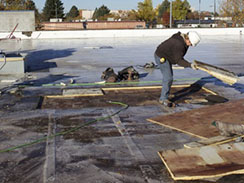
Once the interior conditions are documented, the inspection can move to the roof. Areas to review may include seams, flashing, penetrations, drains, previous repairs, punctures, and transitions around rooftop equipment. The exterior defect may be some distance from where the water appears inside.
A methodical inspection should connect the proposed repair to a documented condition rather than placing a patch directly above the interior stain simply because it is the most obvious location.
Why a Surface Patch May Not Be Enough
A patch can be appropriate when the defect is localized and the surrounding roof remains suitable for repair. But if water has moved beneath the membrane, or if several defects are contributing to the leak, a surface-only repair may miss part of the problem.
855-472-4932
Check Insulation and Decking Only When Evidence Supports It
Wet insulation can lose thermal performance, and prolonged moisture can damage other roof components. That does not mean every interior leak has saturated insulation or deck damage. The repair plan should separate confirmed findings from suspected concealed conditions and explain when further investigation is needed.
When a Localized Repair Is Reasonable
Flat roof repair may be appropriate when the roof is generally serviceable and the problem is limited to a defined area. Repeated leaks, widespread seam problems, extensive deterioration, or verified concealed moisture can change that discussion and may justify a broader repair, restoration, or replacement evaluation.
Verify the Repair After the Work Is Complete
Closeout should include a record of what was found and what was repaired. Useful documentation can include photos, repair locations, materials used, and notes about areas that should be monitored.
After the next relevant weather event, compare the original symptom-location log with current conditions. Existing staining may take time to dry, so the absence of a new stain is useful evidence, but it should not be treated as an instant guarantee. If symptoms return, the contractor may need to reassess the moisture path or look for another contributing defect.
Flat Roof Repair in Ames, IA
Hoppe Roofing provides commercial flat roof repair and inspection services in Iowa. For an Ames property with a leak, stain, seam issue, flashing problem, or another low-slope roof concern, call (855) 472-4932 to discuss an assessment focused on the roof’s actual condition.
Frequently Asked Questions
How can a flat roof leak appear far from the actual damage?
Water can travel beneath roofing materials before entering the building, so the visible stain or drip may be some distance from the exterior defect.
Is interior damage always a sign of major roof failure?
No. Interior symptoms can come from a localized defect, but the roof and any suspected concealed conditions should be evaluated before the repair scope is decided.
Should insulation always be replaced during flat roof repair?
No. Replacement should follow verified wet or damaged conditions rather than an assumption that every leak has affected the insulation.
How do I verify that a flat roof repair addressed the leak?
Keep the original symptom-location record, review the repaired area documentation, and watch for new moisture after relevant weather. Recurring symptoms are a reason for follow-up evaluation.