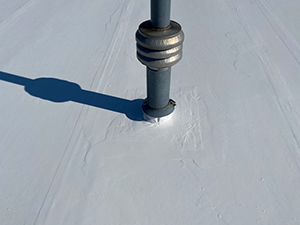
What is a commercial roof inspection, and what should a building owner expect from one? A useful inspection documents the roof conditions that can be observed, identifies areas that need attention, and makes clear where concealed conditions remain uncertain. For a commercial property in Spencer, IA, Hoppe Roofing can be reached at (855) 472-4932 to discuss a professional roof inspection.
What a Commercial Roof Inspection Includes
A roof inspection is a systematic review of the accessible roof surface, seams, flashing, penetrations, drainage components, edges, and other visible details. When appropriate and safely accessible, the inspection can also include interior or underside areas where stains, damp materials, or other symptoms may help explain what is happening above.
The purpose is not to assume that every visible symptom has an obvious cause. A ceiling stain can show where water became visible inside the building, but it does not always identify the exact roof entry point. Likewise, a surface that looks intact does not prove that insulation or other concealed materials below it are dry and undamaged.
A related Hoppe Roofing page on roof inspection in Cedar Falls gives additional context on inspection programs and reporting.
What a Visual Inspection Can Confirm
A visual inspection can document open seams, punctures, membrane deterioration, damaged flashing, loose edge details, blocked drainage, visible ponding, surface cracking, or other conditions that are apparent at the time of the visit. It can also record roof areas that appear sound and note locations that should be monitored.
Those observations are valuable because they create a condition record the owner can compare with future inspections and repair work. Photos, roof-area references, and written notes help make the report more useful than a general statement that the roof is either “good” or “bad.”
What a Visual Inspection Cannot Prove
Some commercial roof conditions are concealed. Moisture can migrate beneath a membrane, insulation can be affected below an apparently intact surface, and the full path of a leak may not be visible during a standard inspection. A responsible report should separate observed conditions from suspected concealed conditions rather than presenting an assumption as a confirmed defect.
If the inspection raises a concern that cannot be confirmed visually, the next step may be additional moisture investigation or another project-appropriate evaluation. The method depends on the roof assembly, access, weather, and the condition being investigated. Any screening result should be interpreted with its limitations and should not be treated as proof of hidden damage by itself.
Why Commercial Roof Inspections Matter

Commercial roofs can develop small problems before occupants notice an interior leak. Inspection gives the owner a chance to document changes in seams, flashing, drainage, penetrations, and other details before deciding what work is appropriate. It can also help distinguish an isolated repair need from a condition that deserves a broader assessment.
Inspection frequency should follow the roof’s condition, building use, rooftop activity, prior repairs, written warranty requirements, and significant weather events. There is no single twice-a-year rule that fits every commercial roof. A building with frequent rooftop traffic or a recent repair history may need different follow-up than a roof with stable conditions and limited activity.
What Should the Inspection Report Include?
A useful report should identify what was inspected, where findings are located, what was directly observed, what remains uncertain, and what next step is recommended for each significant condition. Photos are most useful when they can be matched to a specific roof area or detail.
The report should also separate urgency from importance. Some findings may need prompt repair, while others may be suitable for monitoring or planned maintenance. If a concealed condition is suspected, the report should explain what additional information is needed before a repair, restoration, or replacement scope is approved.
What Happens After the Report?
The report is a decision tool, not the end of the process. For a confirmed localized defect, the next step may be a defined repair. For a roof that remains serviceable but has broader surface wear, restoration may be worth evaluating if the existing assembly, moisture condition, drainage, and preparation requirements support that approach. If deterioration is widespread or concealed conditions are significant, a broader replacement assessment may be appropriate.
Owners should keep the inspection report with later repair records, approved scope changes, photos, and warranty documents. Future inspections can then compare the same locations instead of starting from scratch, which makes recurring conditions easier to identify.
Commercial Roof Inspection in Spencer, IA
A strong commercial roof inspection gives the owner a clear record of visible conditions while being equally clear about what cannot be confirmed without further investigation. That distinction helps prevent unnecessary work based on guesses and gives contractors a better basis for a repair or maintenance proposal.
For another example of Hoppe Roofing’s inspection guidance, see the company’s Sioux Falls roof inspection page. To discuss a Spencer commercial roof, contact Hoppe Roofing at (855) 472-4932.
Frequently Asked Questions
Can a commercial roof inspection find every problem?
No. It can document visible and accessible conditions, but concealed moisture or hidden substrate problems may require additional investigation before they can be confirmed.
How often should a commercial roof be inspected?
The schedule should follow roof condition, building use, rooftop activity, repair history, significant weather, and any written warranty or maintenance requirements.
What should a roof inspection report tell me?
It should identify observed conditions, locations, photos when useful, priorities, unresolved questions, and the recommended next step for each significant finding.
Does a suspected moisture area mean the roof needs replacement?
No. A suspected condition needs appropriate confirmation, and the final repair, restoration, or replacement decision should follow the actual extent of the confirmed problem.