For commercial property owners in Omaha, NE, choosing the right roofing membrane is one of the most important decisions a building will face. TPO roofing has earned its place as the preferred single-ply system for commercial properties across Nebraska because it handles the climate, the budget, and the long-term performance demands of this region better than most alternatives on the market. At Hoppe Roofing, we have installed and serviced commercial roofing systems since 1977, and the case for TPO on a Nebraska building is one we make often. Call us at (855) 472-4932 to find out whether your building is a fit.
Why TPO Roofing Is Built for Omaha Commercial Buildings
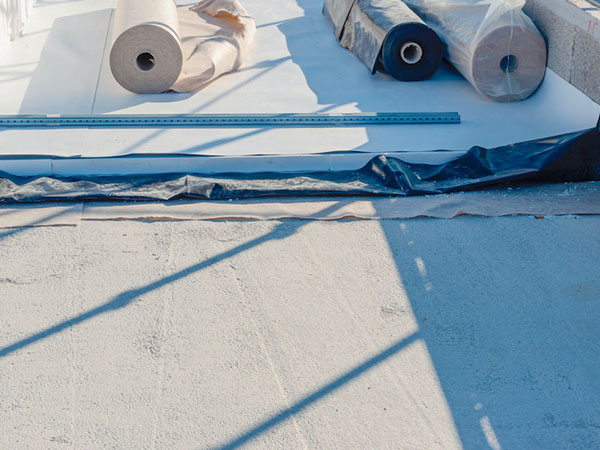
Omaha sees a serious range of temperatures across the year. Summers push past 95 degrees with humidity, while winters drop well below zero with freeze-thaw cycles that put real stress on every roof system. A membrane that performs well in one season but cracks or fails in the other is not built for Nebraska. TPO, short for thermoplastic polyolefin, is a single-ply membrane engineered to handle exactly this kind of climate range, which is why it has become the standard on so many commercial buildings across the region.
Cut Cooling Costs with TPO Roofing
The white reflective surface of a TPO roof is one of its biggest advantages on a Nebraska commercial building. Standard dark roofing materials absorb solar heat all summer and transfer that heat directly into the building, driving up the cooling load every time the air conditioner runs. A reflective TPO surface sends most of that solar energy back into the sky instead of into the building. For a large commercial roof in Omaha, that difference translates into measurable cooling cost reductions across every summer for the life of the membrane.
Heat-Welded Seams Hold Up to Nebraska Weather
The way TPO sheets are joined sets it apart from many other commercial roofing systems. Where adjacent membrane sheets meet, the seams are heat-welded using hot air equipment that fuses the two pieces into a single continuous material. The bond at the seam is actually stronger than the membrane itself when the weld is done properly. That matters in a climate where wind, snow load, and dramatic temperature swings put constant stress on every joint. A glued or taped seam will eventually become fatigued and open up under that kind of pressure. A properly heat-welded TPO seam stays sealed for decades.
TPO Roofing Delivers Strong Long-Term Value
Long-term performance is where TPO really proves itself on commercial roofs. A quality TPO membrane installed correctly can deliver 20 to 30 years of reliable service in a Nebraska climate, with minimal maintenance beyond annual inspections and routine debris cleanup. When the lower cooling costs are factored in across that lifespan, along with the reduced repair frequency compared to systems that rely on mechanical fasteners or adhesive-only seams, the total cost of ownership comes out well below most alternatives. That is the financial case that brings commercial property owners back to TPO again and again.
Get TPO Roofing That Performs Year After Year

Commercial building owners in Omaha, NE who want a roofing system designed for energy efficiency, durable seam construction, and long-term value are landing on TPO roofing systems for good reason. At Hoppe Roofing, we have spent over 45 years installing commercial TPO roofing systems across NE and the surrounding region, and we know what it takes to get a TPO project done right the first time. Call us at (855) 472-4932 to schedule a free inspection and find out what your building needs.
FAQ
How long does a TPO roof last in Nebraska’s climate?
A properly installed quality TPO membrane typically lasts 20 to 30 years on a Nebraska commercial building with regular inspection and minor maintenance.
How does TPO compare to EPDM for commercial buildings?
TPO offers a reflective white surface and heat-welded seams, while EPDM is a darker rubber membrane with adhesive or taped seams that absorbs more heat.
What should a building owner expect during a TPO installation?
A typical installation includes deck inspection, insulation placement, membrane positioning, seam welding, and flashing detail work, with most projects completed in days rather than weeks.