Each Iowa winter leaves its mark on commercial flat roofs across Waterloo, and the spring thaw is when that damage becomes visible. As snow melts and temperatures swing above and below freezing, EPDM membranes that held up fine in October can show new seam separations and surface cracks by April. Rubber roof repair addresses these seasonal effects before they turn into water damage.
Call Hoppe Roofing at (855) 472-4932 for service in Waterloo, IA.
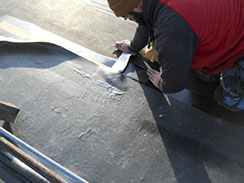
How Waterloo Winters Affect EPDM Roofs
EPDM, a synthetic rubber membrane (ethylene propylene diene monomer) used widely on commercial flat roofs, is built to handle temperature swings, but Waterloo’s winter cycle pushes it hard. Snow accumulation adds weight across the roof surface, and as it melts unevenly, water can pool against parapet walls or around rooftop units before refreezing overnight. That freeze-thaw repetition works on existing seams and flashing details, gradually loosening bonds that were tight the previous fall.
Ice that forms along roof edges and around drains can also wedge into small gaps in the membrane, widening them with each freeze cycle. By the time spring arrives, what started as a hairline seam gap may have become a clear separation. These changes are often not visible from the ground, which is why a post-winter check matters even if no leak has appeared yet.
Spring Inspection: What to Look For
A spring inspection after a Waterloo winter should focus on a few specific areas. Seams are the first priority, since EPDM seams are typically bonded with adhesive or tape, and freeze-thaw cycling is the most common cause of seam failure on rubber membranes. Flashing around rooftop units, vent pipes, and parapet walls should be checked for gaps where ice may have worked materials loose over the winter months.
Drains and scuppers deserve close attention too. Debris that collected in the fall and froze in place over winter can block drainage paths well into spring, creating ponding conditions on a membrane that otherwise drains properly. Any area where ponding water remains more than 48 hours after a rain event should be flagged for repair or, in persistent cases, drainage modification.

Rubber Roof Repair Methods for Spring Damage
Most spring repair work on EPDM systems falls into a few categories. Seam repair involves cleaning the affected area, applying new adhesive or seam tape, and pressing the membrane back into a watertight bond. Patching addresses punctures or small tears using EPDM patch material adhered with compatible bonding agents. Flashing repair re-secures and reseals the membrane around penetrations and wall terminations where winter movement created gaps.
These repairs are most effective when completed before summer thunderstorm season brings heavy rainfall to Waterloo. A membrane with several small unresolved seam issues going into a wet summer is at much higher risk of developing an active leak than the same roof repaired promptly in spring.
Hoppe Roofing Provides Rubber Roof Repair in Waterloo
Hoppe Roofing has worked on commercial EPDM systems across Iowa since 1977. As a veteran-owned business with more than 45 years of experience, the team knows how Waterloo’s winter and spring weather patterns affect rubber roofing and where to look for the damage that follows.
For rubber roof repair in Waterloo, IA, contact Hoppe Roofing at (855) 472-4932 today.
FAQ
Why does my EPDM roof develop problems after winter?
Freeze-thaw cycling during winter puts repeated stress on seams and flashing details. Water that gets into small gaps expands when it freezes, gradually widening those gaps. By spring, seams that were intact in the fall may show separation, even though no single event caused obvious damage.
How soon after winter should I have my roof checked?
Early Spring, once the snow has melted and drains are clear, is the ideal window. This allows time to identify and repair any seam or flashing damage before summer rainstorms test the membrane’s ability to shed water.
Can a damaged EPDM seam be repaired without replacing the whole roof?
In most cases, yes. Seam repair and patching are standard procedures for EPDM systems and can resolve isolated seam separations or punctures effectively. Replacement is typically only necessary when damage is widespread across the membrane or the rubber itself has become brittle with age.