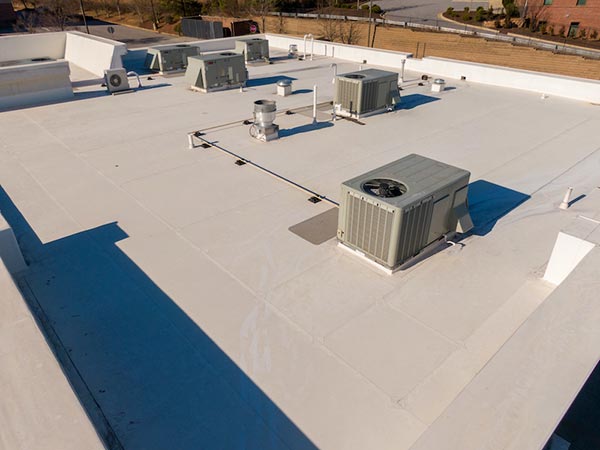
Commercial property owners in Omaha, NE need roofing systems that can withstand hot, humid summers, freezing winter temperatures, and severe storms throughout the year. Advances in roofing technology have made single-ply roofing one of the most popular choices for commercial buildings because it offers dependable protection, energy efficiency, and long-term performance. Single-ply roofing provides a durable, lightweight solution that helps commercial buildings perform well in Omaha’s demanding climate while simplifying long-term roof maintenance.
Call Hoppe Roofing at (855) 472-4932 for single-ply roofing in Omaha, NE.
Why Single-Ply Roofing Is a Popular Commercial Choice
Single-ply roofing has become a preferred option for commercial buildings because it combines reliable weather protection with installation flexibility. Unlike heavier roofing systems, single-ply membranes add less weight to the building while still delivering excellent waterproofing performance.
Several types of single-ply roofing are available to meet different building requirements. Thermoplastic polyolefin, commonly called TPO, uses heat-welded seams that create strong, watertight connections between roofing panels. Ethylene propylene diene monomer, known as EPDM, is a synthetic rubber membrane valued for its flexibility, especially during cold weather. Each system offers advantages depending on the building’s design, occupancy, and operating conditions.
The lightweight nature of these roofing systems can also simplify installation on many commercial structures while reducing stress on the building’s structural components.
Single-Ply Roofing Performs Well in Omaha’s Climate

Omaha experiences significant weather changes throughout the year. Commercial roofs must tolerate intense summer heat, freezing winter temperatures, heavy rainfall, hail, and powerful wind events without compromising building protection.
Heat-welded seams on TPO roofing help resist water intrusion during severe storms because the membrane panels are fused together to create continuous, waterproof joints. These durable seams are one of the defining features that make TPO a dependable commercial roofing system.
EPDM roofing performs particularly well during cold weather because the rubber membrane remains flexible as temperatures drop. This flexibility allows the roofing system to accommodate seasonal expansion and contraction while reducing stress on the membrane.
Reflective white roofing surfaces available with many single-ply systems also help reduce solar heat absorption during Omaha’s hot summers. By reflecting sunlight instead of absorbing it, these roofs help lower rooftop temperatures and support improved energy efficiency for many commercial buildings.
Compatibility with Rooftop Equipment
Many commercial properties rely on rooftop heating, ventilation, and air conditioning equipment to support daily operations. A roofing system must perform reliably around these installations while maintaining waterproof protection.
Single-ply roofing works well on buildings with rooftop equipment because professional installers can create properly sealed flashing around pipes, vents, curbs, and mechanical units. Careful detailing around these penetrations helps prevent water intrusion while allowing maintenance personnel to service rooftop equipment safely.
As buildings expand over time, additional rooftop systems may be installed. Single-ply roofing offers flexibility for accommodating future modifications while maintaining the roof’s overall performance.
Routine inspections also help identify areas around rooftop equipment where maintenance may be needed. Addressing flashing concerns early reduces the likelihood of water entering the building through high-traffic roof areas.
Long-Term Value Through Proper Maintenance
Although single-ply roofing is designed for long service life, regular maintenance remains essential for preserving its performance. Scheduled roof inspections allow building owners to identify small concerns before they develop into costly repairs.
Maintenance typically includes evaluating seams, flashing, drainage systems, rooftop equipment, and the membrane surface for signs of wear. Removing debris and keeping drains clear also helps prevent standing water that can shorten the roof’s lifespan.
With professional installation and consistent maintenance, many single-ply roofing systems provide dependable protection for decades. Property owners benefit from a roofing solution that combines durability, energy efficiency, and relatively straightforward maintenance requirements.
Protect Your Investment with Single-Ply Roofing
Single-ply roofing continues to be one of the most practical commercial roofing systems for Omaha businesses because it performs well in changing weather conditions while supporting long-term building protection. Whether a property benefits most from heat-welded seams, flexible rubber membranes, or reflective roofing surfaces, selecting the appropriate system helps maximize roof performance for years to come.
Hoppe Roofing serves commercial property owners throughout Omaha with roofing solutions designed for Nebraska’s demanding climate. For single-ply roofing in Omaha, NE, contact Hoppe Roofing at (855) 472-4932 today.
FAQ
What are the main types of single-ply roofing for commercial buildings?
The most common types are TPO and EPDM. TPO features heat-welded seams for strong waterproofing, while EPDM uses a flexible rubber membrane that performs well in cold temperatures. The right choice depends on the building’s specific needs.
How long does single-ply roofing last on an Omaha commercial building?
With professional installation and regular maintenance, many single-ply roofing systems provide reliable service for 20 to 30 years or longer, depending on the membrane type, roof condition, and maintenance program.
Is single-ply roofing a good choice for buildings with rooftop HVAC equipment?
Yes. Single-ply roofing is well suited for buildings with rooftop equipment because flashing can be installed around mechanical units, pipes, and penetrations to maintain dependable waterproofing while allowing future equipment servicing.