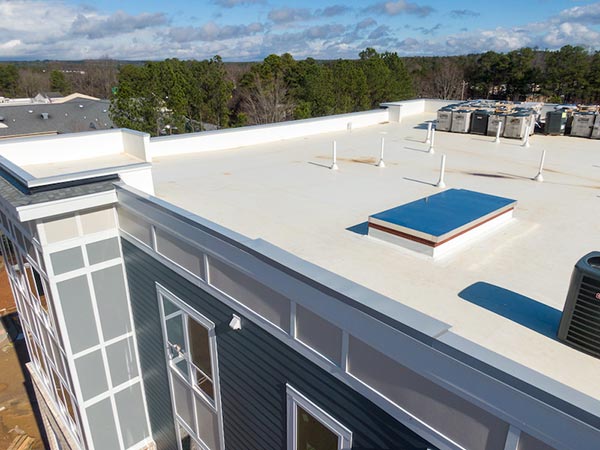
Commercial property owners in Omaha, NE have several reliable options when choosing a roofing system for a flat roof. Single-ply roofing systems are among the most popular because they offer durability, weather resistance, and long service life. Just as important as selecting the right membrane is choosing experienced single-ply roofers, since proper installation directly affects roof performance, warranty coverage, and long-term reliability.
Hoppe Roofing installs single-ply roofing systems in Omaha, NE. Call (855) 472-4932 to work with experienced single-ply roofers on your commercial roofing project.
A professionally installed single-ply roof can provide dependable weather protection, reduce long-term maintenance needs, and deliver lasting value for your commercial property.
Understanding Single Ply Roofing
Single-ply roofing refers to commercial roofing systems that use a single layer of synthetic membrane to create a durable, waterproof barrier. These systems are commonly installed on flat and low slope buildings because they provide reliable weather protection while remaining relatively lightweight.
The two most common single-ply roofing materials are TPO and EPDM. TPO is a reflective membrane that helps reduce heat absorption, making it an energy efficient choice for buildings in warmer climates. EPDM is a synthetic rubber membrane known for its flexibility, durability, and ability to perform well through changing temperatures.
Both systems provide dependable long term protection when installed correctly, but each offers distinct advantages depending on the building, climate, and performance goals. Understanding these differences helps property owners choose the roofing system that best fits their facility’s needs rather than basing the decision solely on the initial installation cost.
Understanding the Difference Between TPO and EPDM

Although both are single- ply membranes, TPO and EPDM perform differently in certain situations. TPO membranes are typically joined using heat welded seams that create strong, continuous waterproof connections. These reflective surfaces help reduce rooftop temperatures and may lower cooling costs during Omaha’s hot summers.
EPDM membranes are installed using specialized adhesives to bond seams together. Their flexibility allows them to perform well during Nebraska’s changing weather, including freezing winter temperatures and warm summer conditions.
Older membrane roofing systems often lack some of the weather resistance, flexibility, and installation improvements found in today’s single ply products. Modern materials provide better resistance to ultraviolet exposure and environmental aging, helping commercial roofs remain dependable for many years with proper maintenance.
Selecting the right membrane depends on several factors, including roof design, drainage, energy goals, and the condition of the existing roofing system.
What Makes Experienced Single Ply Roofers Different?
Installing a single-ply roofing system requires specialized knowledge and close attention to detail. Every seam, flashing detail, roof penetration, and drainage component must be installed correctly to create a durable, watertight roofing system.
Professional single-ply roofers understand the installation requirements of each membrane type. Heat welded systems require precise temperature control and proper seam preparation, while adhesive bonded systems depend on clean surfaces and correct application techniques to achieve reliable long term performance.
Experienced contractors also understand how local weather conditions affect roofing performance. In Omaha, commercial roofs must withstand strong winds, hail, heavy rain, snow, and wide seasonal temperature swings. Installing a roofing system with these conditions in mind helps maximize its durability, performance, and service life.
Building owners should also confirm that a contractor is qualified to install manufacturer approved, warranty eligible roofing systems. Following proper installation standards not only protects the roofing investment but also helps ensure warranty coverage remains in place after the project is complete.
Choosing the Right Roofing Partner
Hiring a roofing contractor should involve more than comparing estimates. Property owners benefit from choosing a company with proven experience installing single-ply roofing systems on commercial buildings similar to their own.
A professional roof evaluation should include a thorough assessment of the existing roofing system, drainage conditions, insulation, flashing details, and long term maintenance needs. Contractors who clearly explain their findings, discuss available options, and answer technical questions help building owners make informed decisions that support the long term performance of their roof.
Routine inspections after installation also play an important role in protecting a single-ply roofing system. Identifying and addressing minor issues early helps prevent more costly repairs, extends the roof’s service life, and supports reliable performance for years to come.
Invest in Quality Installation
A single-ply roofing system can deliver dependable weather protection, energy efficiency, and long-term performance when installed correctly. Understanding the differences between membrane options and working with experienced single-ply roofers helps commercial property owners choose the roofing system that best fits their building and long-term goals.
Hoppe Roofing installs single-ply roofing systems in Omaha, NE. Call (855) 472-4932 today to work with experienced single-ply roofers on your commercial roofing project.
Choosing qualified single-ply roofers can improve roof performance, extend service life, and help protect your commercial investment for years to come.
FAQ
What is single ply roofing and how does it differ from other flat roof systems?
Single ply roofing uses one continuous membrane to create a waterproof barrier. Compared to many older roofing systems, modern single ply membranes provide improved flexibility, weather resistance, and simplified maintenance.
How can I tell if a contractor has experience with single ply roofing?
Ask about their experience with commercial membrane systems, installation methods, warranty qualified work, and projects similar to your building. Experienced contractors should also explain how they address seams, flashing, and roof penetrations.
Does single ply roofing perform well in Nebraska’s climate?
Yes. Both TPO and EPDM roofing systems are designed to withstand changing temperatures, seasonal storms, and year-round weather conditions when installed and maintained properly.