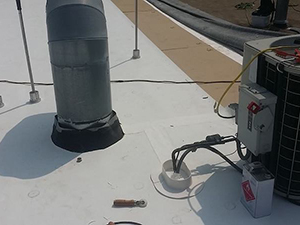
A flat roof is one of the most practical roofing systems available for commercial buildings, but it comes with its own set of vulnerabilities. Unlike sloped roofs that shed water quickly, flat roofs rely on drainage systems and durable membranes to hold up against the elements. When something goes wrong, a flat roof repair needs to happen fast. Ignoring the early warning signs of a flat roof problem can turn a simple fix into a costly project that disrupts your operations.
Partner with Hoppe Roofing for all your commercial roofing services. We’ve been supporting local businesses since 1977. Call (855) 472-4932 today and schedule a consultation.
Flat Roof Repair: Common Issues
Here is a look at the most common flat roof issues commercial property owners face and what it means when they show up.
Ponding Water
A flat roof is designed to drain, not hold water. When drainage is blocked or the roof structure has settled, water pools in low spots and sits. Ponding water is defined as water that remains on the roof more than 48 hours after rain stops. Over time, that standing water adds significant weight to the structure and accelerates membrane breakdown. It also creates ideal conditions for algae and mold growth. If you notice consistent low spots or discoloration on your roof surface, a drainage inspection and possible regrading are worth scheduling before the next rain season hits.
Membrane Blistering and Bubbling
The membrane is the waterproof layer that protects everything below it. When moisture or air gets trapped between the membrane and the substrate during installation, or seeps in over time through small cracks, blistering and bubbling occur. These raised areas weaken the membrane and make it prone to puncture. Left unaddressed, a blister can split open and allow water to penetrate directly into the roof assembly. Small blisters can often be cut, dried, and patched. Larger areas of blistering may require section replacement.
Flashing Failures
Flashing is the metal or membrane material used to seal transitions around edges, vents, skylights, HVAC units, and other roof penetrations. It is often the first place a flat roof develops a leak because these transition points experience the most movement and stress. When flashing pulls away, corrodes, or cracks, water finds a direct path into the building. Many leaks that appear to come from the center of a roof actually originate at flashing points and travel before showing up inside. Flashing repairs are among the most common flat roof service calls.
Punctures and Surface Damage
Commercial roofs take a lot of foot traffic from HVAC technicians, maintenance crews, and contractors. Equipment being dragged or dropped, fasteners from installation work, and even wildlife can puncture the membrane surface. Small punctures are easy to overlook until water starts showing up inside. Regular inspections are the best defense here. Catching a puncture early means a straightforward patch. Waiting means potential structural damage to decking and insulation underneath.
Shrinkage and Seam Separation
EPDM and other single-ply membranes can shrink over time due to temperature fluctuations and UV exposure. As the material contracts, it pulls away from edges and causes seams to separate. Once seams open up, water entry is nearly immediate. Shrinkage-related issues tend to show up on older roofs or on systems that were improperly installed without enough slack. Hoppe Roofing’s team evaluates membrane condition as part of any flat roof inspection to catch shrinkage before it becomes a leak.

Poor Drainage and Clogged Drains
Gutters, interior drains, and scuppers on flat roofs require regular clearing. Leaves, debris, and sediment build up quickly, especially in areas with mature trees nearby. When drains back up, the ponding cycle starts. In colder climates, blocked drains also contribute to ice dam formation along roof edges, which adds weight and can force water under membranes. A simple drain maintenance schedule can prevent a significant number of flat roof repair calls.
What to Do When You Spot a Problem
The most important step any property owner in Hartford or the surrounding region can take is to schedule a professional inspection at the first sign of trouble. Water stains on interior ceilings, bubbling paint near roofline walls, unexplained spikes in heating or cooling costs, and visible surface damage on the roof itself are all signals worth acting on. Hoppe Roofing works with commercial property owners to assess damage accurately and recommend the right repair approach, whether that is a targeted patch, flashing replacement, or a more comprehensive membrane repair.
Flat Roof Repair Specialists
Flat roofs are built to last, but they perform best when problems are caught early. Routine inspections and prompt repairs keep a manageable issue from becoming a major expense.
To learn more about flat roof issues, call Hoppe Roofing today at (855) 472-4932 and speak with an expert.
FAQ
What is the difference between a flat roof repair and a roof restoration?
Repair targets a specific problem, such as a failed seam, a puncture, or damaged flashing, and addresses it directly. Restoration involves applying a coating or new membrane layer over the existing system to extend its overall lifespan. Restoration is typically considered when a roof is aging but structurally sound enough to avoid full replacement.
Can a flat roof be repaired instead of replaced?
In many cases, yes. Isolated membrane damage, flashing failures, and drainage problems are all repairable without replacing the entire roof system. A professional inspection will determine whether targeted repairs are sufficient or whether the membrane has deteriorated too broadly to patch effectively.
How long does a flat roof repair typically take?
Most standard repairs, such as patching punctures or resealing flashing, can be completed in a day or less. Larger section replacements or drainage system corrections may take two to three days depending on the scope and weather conditions.