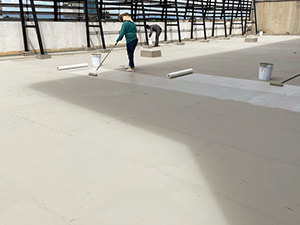
For a commercial building in Chamberlain, SD, a roof coating can be a practical restoration option when the existing roof is still suitable for coating. The decision should be based on moisture, adhesion, substrate condition, drainage, and compatibility rather than on roof age alone or on an assumption that coating can correct every problem beneath the surface.
Hoppe Roofing’s confirmed commercial services include acrylic roof coatings and restoration. Before scheduling work for a Chamberlain property, current service availability should be confirmed. For an existing commercial roof, the useful first step is to determine whether the roof can be prepared and repaired for coating or whether wet insulation, deteriorated decking, drainage problems, or widespread failure require a different scope first. Call (855) 472-4932 to discuss the roof condition.
What Roof Coating Does
A roof coating is a liquid-applied protective layer installed over a compatible existing roof surface. Once cured, it can provide a continuous protective surface that reduces direct exposure of the roof membrane or substrate to sunlight and weather. Reflective coatings can also reduce roof-surface heat gain, although actual building energy use depends on insulation, HVAC operation, occupancy, air leakage, roof area, and other conditions.
Coating is a restoration strategy for a roof that remains serviceable. It does not replace damaged decking, remove saturated insulation, or correct a drainage design problem. Those conditions should be addressed before a coating system is considered.
Is the Roof a Good Candidate for Coating?
| Factor | Evidence Supporting Coating | Evidence Requiring Repair or Broader Review |
|---|---|---|
| Moisture | The assembly is dry enough for the selected system, with limited affected areas identified and addressed. | Wet insulation, trapped moisture, or an extent of moisture that has not yet been defined. |
| Adhesion and surface condition | The existing surface can be cleaned, repaired, and prepared to meet the coating system’s requirements. | Widespread lifting, delamination, contamination, or another condition that prevents a stable bond. |
| Substrate condition | The deck and supporting materials remain serviceable after any included repairs. | Rotten decking, structural deterioration, or another substrate problem that coating cannot correct. |
| Drainage | Drainage functions adequately or correctable maintenance items are included in the scope. | Chronic ponding caused by slope, drain, or design problems that need separate corrective work. |
| Compatibility | The proposed coating, primer, preparation, and repair materials are compatible with the existing roof. | Existing materials, prior coatings, or contaminants prevent the proposed system from meeting compatibility requirements. |
If the roof falls into the right-hand column, coating should not be used to hide the condition. The needed repair, moisture removal, deck work, or drainage correction should be defined first. If the roof is no longer a sound restoration candidate, Hoppe Roofing’s commercial roof replacement information provides context for that separate project path.
Preparation, Repair, and Application

Before coating, the roof should be cleaned and prepared for the selected system. Failed seams, damaged flashing, open penetrations, or other localized defects included in the scope should be repaired rather than simply covered. The exact preparation, primer, application method, coverage rate, thickness, and cure conditions should follow the selected coating system and written project specification.
Application acceptance should also be tied to the project requirements. Depending on the system and contract, the closeout review may address repaired details, coverage, adhesion, transitions, drainage areas, and other agreed criteria. There is no single coat count, thickness, or inspection method that applies to every roof.
Coating, Repair, or Replacement?
A coating may make sense when deterioration is mainly at the surface and the underlying roof remains serviceable. A localized repair may be more appropriate when the problem is confined to one seam, flashing detail, penetration, or other defined defect. Replacement becomes a separate consideration when the roof has widespread failure, wet insulation that cannot be addressed economically within a restoration scope, deteriorated decking, or another condition that prevents reliable coating performance.
Cost should be compared against the actual scope rather than assumed from service type alone. Coating can involve less removal than a full tear-off, but preparation, repairs, access, product requirements, and roof condition all affect the final project. Likewise, a coating should not be presented as a guaranteed way to avoid future repairs or replacement.
Maintenance After Coating
A coated roof still needs ongoing inspection and maintenance. Future service should follow the roof condition, selected coating system, building use, weather exposure, and any applicable project or product requirements. Hoppe Roofing’s roof maintenance program provides related context for continuing roof care.
If the building is considering a different roof system instead of restoration, Hoppe Roofing’s single-ply roofing information covers that separate system-selection decision.
Roof Coating in Chamberlain, SD
For a Chamberlain commercial roof, the coating decision should start with the roof condition rather than with a general promise about lifespan or savings. Moisture, substrate condition, drainage, adhesion, compatibility, and the repairs required before application all affect whether restoration is appropriate. Service availability for Chamberlain should be confirmed before work is scheduled.
Frequently Asked Questions
Can roof coating be applied over wet insulation?
No. Wet insulation or trapped moisture should be addressed before coating is considered. The roof needs to meet the moisture and preparation requirements of the selected system.
Will a roof coating fix ponding water?
No. Coating does not correct slope, drain, or design problems that cause chronic ponding. The drainage condition needs its own evaluation and corrective scope.
Is roof coating always less expensive than replacement?
No. Coating may require less removal than replacement, but actual cost depends on preparation, repairs, access, product requirements, and the condition of the existing roof.
Does a coated roof still need maintenance?
Yes. Coating is a restoration strategy, not the end of roof maintenance. Future inspections and maintenance should follow the roof condition and the requirements of the selected system.