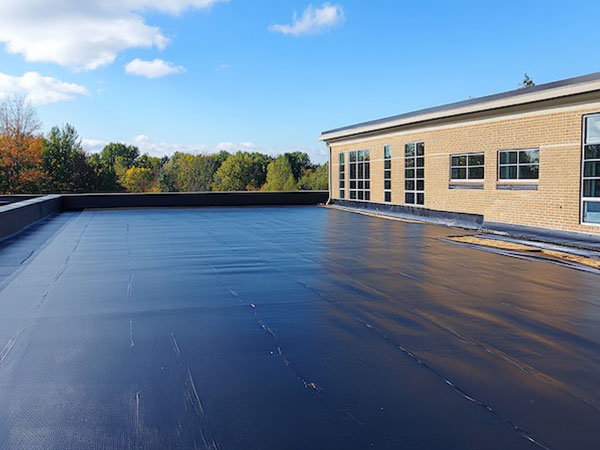
Commercial roofs in Bellevue, Nebraska experience sharp seasonal changes, from freezing winter temperatures to hot, humid summers and severe spring storms. Choosing a roofing membrane that can adjust to these changing conditions helps maintain reliable protection throughout the year. EPDM roofing provides a flexible rubber membrane designed to perform through temperature changes and demanding weather conditions. Call Hoppe Roofing at (855) 472-4932 for EPDM roofing in Bellevue, NE.
EPDM Roofing Remains Flexible During Nebraska Winters
EPDM stands for ethylene propylene diene monomer; a synthetic rubber roofing membrane commonly used on commercial flat and low slope roofs. One of its defining characteristics is flexibility, which becomes especially valuable when temperatures fluctuate.
Bellevue winters can expose commercial roofs to freezing temperatures, snow, ice, and repeated freeze and thaw cycles. Roofing materials naturally expand and contract as temperatures change. A membrane that becomes overly rigid can experience additional stress around seams, flashing, penetrations, and other transitions.
EPDM maintains flexibility across a broad temperature range. This allows the membrane to accommodate movement as the roof assembly responds to changing winter conditions. Properly installed seams and flashing remain important because these details must move with the surrounding membrane while continuing to resist moisture.
Winter performance also depends on drainage. Snow that melts during warmer periods can create standing water that later freezes. Keeping drains and other drainage components open helps water leave the roof instead of repeatedly freezing on vulnerable areas.
Hot Summers Put Commercial Roofs to the Test

Winter is only part of Bellevue’s roofing challenge. Summer brings heat, humidity, and prolonged ultraviolet exposure. These conditions can gradually affect roofing materials, particularly when an aging membrane already has areas of deterioration.
EPDM is designed to withstand outdoor exposure, but seasonal inspections remain valuable. An evaluation can identify surface changes, deteriorating seams, damaged flashing, and other conditions that should receive attention before they progress.
Rooftop equipment and penetrations also deserve attention during hot weather. Different materials may expand at different rates as temperatures rise, placing additional movement around curbs, pipes, vents, and flashing. Checking these transitions helps identify sealants or other components that have started to separate.
Keeping the roof clean also makes inspection easier. Removing debris allows drainage areas, membrane surfaces, and important roof details to remain visible and accessible.
EPDM Roofing Can Face Severe Storm Conditions
Spring and summer storms can expose Bellevue commercial buildings to strong winds, heavy rain, and hail. While EPDM provides a durable roofing surface, severe weather can still damage a membrane or its surrounding components.
Hail impacts can create punctures, cuts, or other localized damage, depending on hail size, membrane condition, and the roof assembly beneath it. Wind can also move debris across the roof, potentially damaging the membrane or affecting flashing and perimeter components.
A professional evaluation after a significant storm can identify problems that may be difficult to recognize from inside the building. Damage does not always produce an immediate interior leak, so the absence of visible water should not automatically be interpreted as proof that the roof was unaffected.
One advantage of EPDM is that localized membrane damage can often be repaired when the surrounding roofing system remains in serviceable condition. The appropriate repair depends on the location, severity, and overall condition of the affected area.
Seasonal Maintenance Supports EPDM Performance
A practical maintenance schedule follows Bellevue’s changing seasons. Spring inspections can evaluate conditions after winter, including seams, flashing, drainage components, and areas affected by snow or ice. This is also an opportunity to look for changes caused by repeated freezing and thawing.
Fall inspections prepare the roof for another winter. Drains can be checked for leaves and debris, while membrane seams, penetrations, and perimeter details can be evaluated before freezing weather arrives.
Additional inspections may be appropriate following severe hail, wind, or other major weather events. Regular documentation can also help property managers track changes in membrane condition from season to season.
Choose EPDM Roofing for Bellevue Weather
EPDM roofing combines flexibility with dependable weather resistance, making it well suited to commercial buildings exposed to Nebraska’s changing seasons. Routine inspections and timely maintenance help the membrane continue performing through winter cold, summer heat, and severe storms.
For EPDM roofing in Bellevue, NE contact Hoppe Roofing at (855) 472-4932 today.
FAQ
How does EPDM roofing hold up in Nebraska winters?
EPDM remains flexible at low temperatures, allowing the membrane to accommodate movement as the roof assembly expands and contracts. Proper drainage, flashing, seams, and maintenance also contribute to reliable winter performance.
How often should an EPDM roof in Bellevue be inspected?
Commercial roofs should generally receive professional inspections at least twice per year, commonly in spring and fall. Additional evaluations are appropriate after severe storms or other events that could damage the roofing system.
Can EPDM roofing be repaired after hail damage?
Yes, localized EPDM damage can often be repaired when the surrounding membrane and roof assembly remain in suitable condition. An inspection is needed to determine the extent of the damage and appropriate repair method.