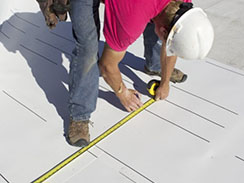
Single-ply roofing is a common choice for commercial and industrial buildings in Yankton, SD, and Hoppe Roofing works with the commercial roof systems found on those buildings, including single-ply roofing. Membranes such as TPO, PVC and EPDM suit large, low-slope roof areas, but they are not interchangeable. The right choice, or the right repair plan for a membrane already in place, depends on the condition of the roof deck, how water leaves the roof, how the membrane is attached and what the building does underneath and on top of it.
This article walks through those factors so an owner or facility manager can judge a single-ply system for a specific building instead of choosing on headline benefits alone. Hoppe Roofing offers free on-site inspections and estimates in the Yankton area, and the checks below are the kind of questions worth settling during one.
What Single-Ply Means for a Commercial Roof
A single-ply roof is built around one factory-made sheet of membrane, usually installed over insulation and a structural deck. The sheet is joined at its seams and sealed around every edge, curb and pipe. The three membranes most owners hear about are:
- TPO: a heat-weldable thermoplastic membrane, commonly white and reflective.
- PVC: also heat-welded at the seams, and generally regarded as having good resistance to chemicals and grease.
- EPDM: a rubber membrane, typically black, whose seams are usually joined with tape or adhesive rather than heat.
Those differences matter after installation as much as before it. A welded seam and a taped seam fail in different ways, and they are repaired in different ways.
Suitability Checks Before You Choose a Membrane
No membrane is the best answer for every building. The table below lists the conditions that most often separate a good fit from a poor one.
| Condition | What to confirm | Why it affects the choice |
|---|---|---|
| Substrate condition | Whether the deck and existing layers are sound, dry and clean | Wet or damaged layers can limit what is installed over them and may need to be removed first |
| Drainage | Slope, drains, scuppers and any areas where water stays after rain | Ponding water adds stress at seams and should be addressed in the design, not ignored |
| Attachment | Fully adhered, mechanically attached or ballasted, and what the structure can carry | Ballast adds weight, and attachment method affects wind performance and future repairs |
| Insulation | Type, thickness and whether any of it is wet or compressed | The membrane is only as good as the board it sits on, and wet insulation is a common hidden problem |
| Rooftop activity | Foot traffic, HVAC service visits, grease or chemical exhaust | Heavy traffic calls for walkway protection, and exhaust may point toward a more chemical-resistant membrane |
| Detailing | Flashings, curbs, penetrations, edges and transitions | Roof details require particular attention because failures can occur at seams, edges, and penetrations |
| Service access | How crews reach the roof and whether the building can stay in use during work | Access and occupancy shape scheduling, staging and which installation method is practical |

Repair, Coat, and More!
Single-ply roofs need regular attention to remain serviceable. Hoppe Roofing provides services for single-ply roofs ranging from simple repairs to roof coatings. Which one fits depends on what an inspection finds. Localized punctures or a failed flashing may be repairable when surrounding material is sound. A weathered membrane could be considered for coating only after checking compatibility, adhesion, and moisture. Widespread wet insulation or repeated seam failures can justify evaluating flat roof replacement, and the condition assessment should define which work is appropriate.
Seams, Patches and Repair Compatibility
Repair compatibility is the part of single-ply roofing that owners tend to learn about too late. A patch has to suit the membrane it is going onto. Heat-weldable membranes such as TPO and PVC are normally repaired with compatible material that is welded to a clean surface, while EPDM repairs rely on tapes, adhesives and primers made for rubber. Dirt, old sealant or weathering at the repair area can keep a patch from bonding, so the surface has to be cleaned and prepared before anything is applied.
That is why a membrane identification step belongs at the start of every repair. A flat roof repair that treats a leak without confirming the membrane type, the seam condition and the source of the water often fails at the next rain. Water can travel under a membrane before it shows up inside the building, so the area around a leak needs to be checked, not just the spot where it appears.
Questions to ask any contractor before a single-ply project:
- Which membrane is on the roof now, and how was it identified?
- What caused the problem, and does the proposed work address that cause?
- How will seams, flashings and penetrations be handled?
- What will be provided in writing about scope and any warranty terms?
Planning Around Yankton Winters
Winters in South Dakota can be hard on any commercial roof. Freezing and thawing, snow load, and ice at drains and edges all test seams and flashings. Hoppe Roofing recommends having a roof inspected both before and after the winter season. A pre-winter visit can identify loose flashings, open seams and blocked drains before sustained winter exposure. A spring visit can reveal damage following freeze-thaw cycles and snowmelt.
A commercial roof inspection in Yankton from Hoppe Roofing covers the roof membrane, drainage, flashings, skylights, rooftop equipment and penetrations. For owners who prefer a regular schedule, roof maintenance keeps those checks on the calendar. To arrange a free inspection for a Yankton building, call Hoppe Roofing at (855) 472-4932.
Call Us Today!
855-472-4932
Single-Ply Roofing FAQs
What is the difference between TPO, PVC and EPDM?
TPO and PVC are thermoplastic membranes whose seams are typically heat-welded, while EPDM is a rubber membrane whose seams are usually taped or glued. PVC is generally regarded as more resistant to chemicals and grease, and EPDM is typically black while TPO and PVC are usually white.
Can a single-ply roof be repaired instead of replaced?
Often, yes. Punctures, open seams and failed flashings may be repairable when surrounding materials are sound and moisture extent is understood. Widespread moisture or failed seams point toward a larger conversation, which an on-site assessment can settle.
Can a single-ply membrane be coated?
It can depend on the membrane type and its condition. The surface has to be clean, sound and compatible with the coating, so the membrane should be identified and inspected before a coating is chosen.
How often should a commercial single-ply roof be inspected?
Hoppe Roofing recommends an inspection before and after each winter season. Regular checks catch small problems at seams and flashings before they become interior leaks.