Single-ply roofing sounds straightforward. One roof membrane. One layer of protection. One clean-looking system that keeps water out and keeps operating costs under control. But anyone who has owned, managed, or maintained a commercial building for long knows the truth: a roof is never “simple” just because it looks simple.
Hoppe Roofing works with building owners and facility managers across the Cedar Rapids area who want single-ply roofing that holds up to wind, temperature shifts, seasonal storms, and the daily wear that comes from rooftop equipment and maintenance foot traffic. The goal is not just a new membrane. The goal is to have a roof system that stays reliable
To learn more about single-ply roofing systems, contact the experts at Hoppe Roofing, (855) 472-4932.
Single-Ply Roofing: The “One-Layer” Roof That’s Anything but Simple
For commercial buildings in Cedar Rapids, IA, single-ply roofing is often chosen because it can be installed efficiently, performs well on low-slope roofs, and can be engineered to handle real Midwest weather swings. But that last part is the key. The membrane matters, yet the performance of single-ply roofing is built on what happens around the membrane. Details, drainage, and workmanship determine whether your roof becomes a predictable asset or a recurring leak headache.
What “Single-Ply Roofing” Really Means
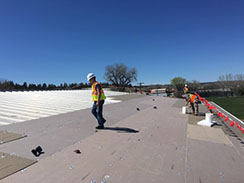
Single-ply roofing refers to a flexible sheet membrane installed over insulation and a roof deck on low-slope buildings. The membrane is the waterproofing layer. That’s the “single ply.” It is installed in large sheets and joined together at seams to create a continuous surface.
Single-ply roofing is popular for many commercial properties because it is lightweight, clean-looking, and installed faster than many multi-layer systems. Many owners also appreciate the energy-efficiency potential when insulation is planned correctly.
But it is a system, not just a sheet. The roof only performs as well as its attachment method, its transitions, and how well it manages water.
Drainage is the Silent Make-or-Break Factor
Even the best single-ply membrane cannot overcome chronic ponding water caused by poor slope, clogged drains, undersized drainage, or debris buildup. Water sitting on a roof increases stress at seams and details and can worsen freeze-thaw impacts in winter.
For many commercial buildings, the right move is not simply “replace the membrane.” It is to correct the roof’s drainage plan. That may involve tapered insulation to improve slope, drain repairs, scupper improvements, addressing low spots, or building a practical routine for cleaning drains and gutters. This is one of the most common areas where a roof goes from performing well on paper to struggling in real life.
If your contractor is not talking about how water moves across your roof and off your building, they are not treating your single-ply roof like the system it is.

What Building Owners Should Ask
A good educational conversation with a roofer should include practical questions that connect to long-term performance, not just short-term installation.
- How will the roof be attached to handle local wind events and weather shifts?
- What insulation plan supports energy efficiency and reduces condensation risk?
- Where are the highest-risk details on this roof, and how will they be reinforced?
- What is the plan for rooftop foot traffic, service pathways, and protection around equipment?
- How will drainage be improved, not just covered up?
- What maintenance expectations exist to protect the roof investment over time?
These questions help you avoid a common commercial roofing mistake: buying a roof based on surface-level simplicity instead of system-level performance.
Single-Ply Roofing Professionals
Single-ply roofing is attractive because it can deliver predictable performance when it is designed and installed correctly. That predictability is what building owners and facility managers want. Fewer surprise leaks. Easier budgeting. Better control over maintenance. Less operational disruption.
The key is treating single-ply roofing like a complete assembly. The membrane is only the visible part. The true quality shows up in the seams, edges, drains, penetrations, and the plan for keeping water moving off the building. When those details are handled with care, single-ply roofing becomes one of the most practical roofing choices available for many commercial properties in Cedar Rapids.
If you’re considering single-ply roofing for your building, Hoppe Roofing can help you evaluate the roof as a system, identify risk points, and build a plan that fits your property, timeline, and long-term goals. Call (855) 472-4932 to speak with an expert today.
FAQ
Can a single-ply roof be restored instead of replaced?
Sometimes. If the membrane is generally sound and issues are localized, restoration or targeted repairs may extend service life. A moisture survey can help confirm whether insulation is still dry and salvageable.
What’s the most common cause of leaks on single-ply roofs?
Most leaks start at seams, penetrations, terminations, and drainage areas rather than the open field of the membrane.