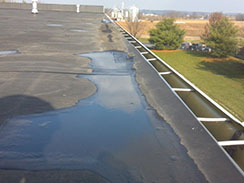
EPDM membranes on commercial buildings in Fort Dodge are built to last, but lasting means maintaining. A rubber roof that goes several years without a professional check accumulates small problems, hairline seam separations, minor flashing gaps, surface oxidation, that stay minor only as long as water stays out. Scheduling rubber roof repair in Fort Dodge, IA before those problems escalate keeps costs in check.
Call Hoppe Roofing at (855) 472-4932.
What Regular Maintenance Catches on a Rubber Roof
EPDM (ethylene propylene diene monomer) is a synthetic rubber membrane widely used on commercial flat roofs for its flexibility and durability in cold climates. Seams bonded with adhesive or tape are the most common source of eventual failure, and they benefit from inspection every one to two years. Early seam separation is simple to rebond; the same separation after a winter of water infiltration may require a full section replacement.
Flashing at rooftop penetrations, HVAC curbs, and parapet wall terminations also reward regular attention. Flashing gaps that develop gradually over years of thermal movement are rarely noticed until a ceiling stain appears inside. Catching a flashing separation during a scheduled maintenance visit means a straightforward reseal. Catching it after the fact means tracing water that has traveled well beyond the original entry point.
Rubber Roof Repair as Part of a Maintenance Program
The most cost-effective approach to managing an EPDM roof is to treat repair as a scheduled activity rather than an emergency response. A biannual inspection, once in the fall and once in the spring, gives a contractor the opportunity to identify and address seam wear, drain blockages, and flashing issues before any of them become active leaks. A maintenance program costs a fraction of a single emergency repair after interior damage has occurred.
Repair work identified during a maintenance visit is also faster to complete. The roof surface is dry, the damage is contained, and the contractor works from a documented history of the roof’s condition rather than diagnosing a new situation under pressure. Planned repair is more efficient than reactive repair in time, materials, and total cost.

When Rubber Roof Repair Reaches Its Limits
Maintenance-based repair addresses issues while they are still localized. Widespread seam failure across multiple sections, wet insulation covering a significant portion of the roof area, and membrane that has become brittle throughout the field all indicate the system has aged past the point where repair makes economic sense. At that point, replacement gives the building a reliable starting point and a full manufacturer warranty.
Expert Rubber Roof Repair in Fort Dodge
Hoppe Roofing has served commercial property owners across north-central Iowa since 1977. A veteran-owned business with more than 45 years of experience on EPDM and other flat roofing systems, the team understands what it takes to keep a rubber roof performing through Iowa’s full seasonal range.
For rubber roof repair in Fort Dodge, IA, contact Hoppe Roofing at (855) 472-4932 today.
FAQ
How often should an EPDM roof be inspected for maintenance?
Twice a year is the standard recommendation for most commercial EPDM roofs, with inspections in fall before freezing temperatures arrive and in spring after the last freeze-thaw cycle. Roofs with a history of seam issues or recurring drainage problems benefit from more frequent checks.
Can EPDM seam separations be repaired without replacing the whole roof?
Isolated seam separations can almost always be repaired without replacing the full system. The repair involves cleaning the affected area, applying compatible adhesive or seam tape, and pressing the membrane back into a watertight bond. Full replacement becomes necessary when separations are widespread or when the rubber has lost flexibility and began cracking throughout the field.
What is the difference between EPDM repair and EPDM replacement?
Repair addresses specific failures within a system that is otherwise performing well: seam separations, punctures, flashing gaps, or surface cracks. Replacement removes the existing membrane and installs a new system when the overall condition can no longer be maintained. An inspection will determine which path is right for the building.