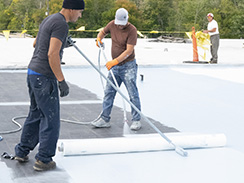
A roof coating can extend the useful life of a commercial roof, but only when the roof underneath is a sound candidate. For a Sheldon, IA building owner, the real question is whether your existing roof can be restored with a coating or whether the conditions on the roof make a coating the wrong choice.
Hoppe Roofing has worked on commercial roofs across Iowa, South Dakota, and Minnesota since 1977, and roof restoration is a core part of what we do. If your roof has gone a long time without attention, call 855-472-4932 to request a free on-site inspection. An inspection helps determine whether a roof coating fits your roof.
Perks of Roof Coatings

We apply coatings to flat roofs and metal roofs. Flat roof coatings can be used over several existing roof types, and metal roof coatings are formulated for metal surfaces, including primers for rust-prone metal. You can read more on our flat roof coatings and metal roof coatings pages.
Benefits that coatings are designed to provide include a seamless, protective layer over the existing roof, a reflective surface that reduces heat absorption, and protection from weather and sun exposure. Reflectivity and energy savings depend on the coating color, the building, and how it is used, so they vary from roof to roof. Hoppe Roofing has described using Conklin coating products. Ask which coating and primer are specified for your roof and request the product requirements and applicable warranty terms in writing before approving the work.
Is Your Roof a Sound Restoration Candidate?
Coating works best as a restoration step on a roof that is still structurally sound. The table below shows what to check and when a coating is not appropriate.
| Condition | What a sound candidate looks like | Likely path | When coating is not appropriate |
|---|---|---|---|
| Moisture | Dry insulation and deck, confirmed by inspection findings | Coating is a candidate | Wet or saturated insulation: remove and replace first; coating will not dry it out |
| Adhesion and surface | Existing surface is sound, clean, and accepts the coating system | Coating is a candidate after cleaning and surface repairs | Failing or delaminating surface that will not hold a coating |
| Substrate condition | Membrane, metal, or foam is intact with isolated repairable defects | Repair defects, then coat | Widespread deterioration, rotted deck, or heavy corrosion that has compromised the metal |
| Drainage | Water leaves the roof without standing for long periods | Coating is a candidate | Ponding from drainage defects: coating does not correct them; fix drainage first |
| Compatibility | Existing roof type is one the coating system is made for | Coating is a candidate with the right system and primer | Roof type or old coating that is incompatible with the product |
| Leak pattern | Leaks are isolated and traceable to specific details | Repair, then consider coating | Leaks everywhere, which may signal replacement |
A coating does not correct drainage defects that cause ponding water, rotten decking, or saturated insulation. Those conditions require a separate corrective scope; applying coating over them can conceal continuing deterioration.
Which Roofs Need Coatings?
Roofs that are aging but still sound are the most common coating candidates, since a coating can restore a weathered surface and delay a full replacement. A newer roof can also be coated as a protective step, but it is not a requirement, and whether it makes sense depends on the roof and your plans for the building. If an inspection shows widespread failure, a flat roof replacement may be the better investment than a coating. Before you approve any coating work, ask to see the inspection findings behind the recommendation, including moisture readings or observations, drainage notes, and photos of the problem areas. That record is also a baseline for later inspections.
How a Coating Project Should Run
- Preparation. The roof is cleaned and the surface is made ready for the coating system.
- Repairs. Compromised areas, such as open seams, damaged flashings, and punctures, are addressed before coating begins.
- Application. The coating system is applied according to the manufacturer’s requirements for the roof type.
- Acceptance. You and the contractor walk the finished roof together and confirm the coverage and details.
- Follow-up inspection. The roof is checked on a schedule, since coated roofs still need regular inspection and cleaning to perform as intended.
Our roof maintenance services can help establish a follow-up schedule based on the roof’s condition, drainage and exposure. Keep the original inspection photos and repair notes so future visits can identify new defects rather than relying only on memory.
Have An Inspection Today
855-472-4932
If your business is in the Sheldon, IA area, call 855-472-4932 and ask for a quote, or request an inspection so we can look for damage that is hard to see from the ground. Our roof inspections in Sheldon are available as a free first step in deciding whether to coat, repair, or replace.
Frequently Asked Questions
Can a roof coating fix a roof that is already leaking?
Sometimes, if the leaks come from isolated, repairable defects. Repairs are made before coating, and a coating will not fix wet insulation, rotten decking, or drainage problems.
Does a coating work on both flat and metal roofs?
Yes, with coating systems made for each. Metal roofs may need primer or rust treatment before coating.
Will a coating lower my energy costs?
It can reduce heat absorption, but savings vary by roof, color, and building use, so they are not guaranteed.
How do I know if my roof should be coated or replaced?
An inspection checks moisture, surface condition, drainage, and the roof’s overall condition. A sound roof is a coating candidate, while widespread failure points toward replacement.