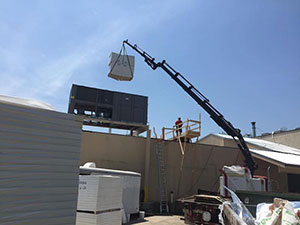
Commercial and industrial property owners in Waterloo, IA can make informed decisions about flat roof replacement with professional guidance. Flat roofs are common on warehouses, offices, retail spaces, and manufacturing facilities due to their efficient use of space and easy access for equipment. When a flat roof reaches the end of its service life, timely replacement is essential to protect the building structure, interior assets, and daily operations.
A properly executed flat roof replacement restores waterproofing, improves insulation efficiency, and ensures long-term durability against Iowa’s seasonal weather. Reach out to Hoppe Roofing for professional flat roof evaluation and installation in Waterloo, IA. Call 855-472-4932.
Planning Your Flat Roof Replacement
Flat roof replacement is the process of removing an existing roofing system that can no longer perform reliably and installing a new system designed for long-term protection. Unlike minor repairs, replacement addresses underlying issues such as membrane fatigue, insulation breakdown, and moisture intrusion that can compromise the entire building envelope.
Flat roofing systems rely on layered components working together. When one layer fails, water infiltration and energy loss can spread beyond visible damage. Replacement allows these components to be rebuilt correctly, restoring the roof as a complete system rather than a temporary fix.
Common Signs Of Roof Failure

Flat roofs often show warning signs before failure becomes severe. Common indicators include:
- Persistent leaks despite repeated repairs
- Ponding water that does not drain within 48 hours
- Blistering, cracking, or shrinking of the membrane
- Wet insulation or recurring interior moisture issues
These issues typically signal that the roof system has reached a point where repairs are no longer cost-effective.
Common Flat Roof Replacement Systems
Flat roof replacement is not a one-size-fits-all process. The replacement system is selected based on building use, structural design, and performance requirements.
Single-Ply Membrane Systems
Single-ply membranes such as TPO, PVC, and EPDM are widely used for commercial flat roofs. These systems provide flexible waterproofing and are designed to handle thermal movement and weather exposure.
TPO and PVC membranes offer reflective surfaces that help reduce heat absorption, while EPDM provides flexibility and durability in fluctuating temperatures. Replacement allows outdated membranes to be upgraded to modern formulations with improved seam strength and longevity.
Modified Bitumen Roofing
Modified bitumen roofs consist of asphalt-based sheets reinforced with polymers. These systems are known for durability and resistance to foot traffic, making them suitable for roofs with frequent maintenance access. Replacement typically involves removing aged layers and installing new reinforced membranes with improved waterproofing performance.
Built-Up Roofing Systems
Built-up roofs use multiple layers of asphalt and reinforcing fabric to create a thick, durable surface. While long-lasting, older built-up systems can become heavy and moisture-laden over time. Replacement allows for removal of saturated materials and installation of lighter, more efficient alternatives.
Replacement Process
Flat roof replacement follows a structured process to ensure performance and longevity.
The existing roof is first assessed to determine whether a complete tear-off is necessary or if selective removal of sections will suffice. In most cases, aged membranes and damaged insulation must be removed to prevent trapped moisture from compromising the new system.
Once the deck is exposed, it undergoes a thorough inspection for structural integrity, and any damaged areas are repaired before proceeding. New insulation is then installed to enhance thermal performance and ensure proper slope for drainage. Finally, the chosen membrane system is applied following manufacturer guidelines and industry standards, with meticulous attention to seams, penetrations, and edge details to ensure a durable, long-lasting roof.
This process ensures the new roof functions as a complete waterproofing and insulation system rather than a surface-level upgrade.
Make Flat Roof Replacement a Strategic Decision
Flat roof replacement is a strategic investment in the long-term performance of a building, rather than just a reactive repair. Replacing an aging roof enhances durability, energy efficiency, and overall protection for the property.
Reach out to Hoppe Roofing for professional flat roof replacement services for commercial and industrial properties in Waterloo, IA, and ensure your building is safeguarded with expert installation. Call 855-472-4932.
FAQ
How long does a flat roof replacement last?
Most modern flat roofing systems last 20 to 30 years with proper installation and maintenance.
Is replacement better than repeated repairs?
When leaks and membrane failure become widespread, replacement is more cost-effective than ongoing repairs.
Can flat roof replacement improve energy efficiency?
Yes, new insulation and reflective membranes reduce heat transfer and energy loss.
Does flat roof replacement disrupt building operations?
Professional planning minimizes disruption and allows many businesses to remain operational during replacement.