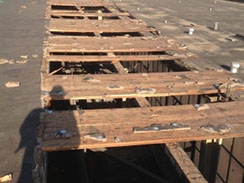
A commercial flat roof in Mankato, MN does not need to be replaced just because it has one leak or one damaged area. The replacement decision should come from the condition of the membrane, insulation, deck, drainage, flashing, and repair history together. Hoppe Roofing has served commercial and industrial building owners since 1977 and provides flat roof replacement along with repair and restoration options.
If the roof still has a serviceable assembly and the problems are limited, repair or restoration may be enough. If moisture is widespread, the deck is damaged, deterioration affects large areas, or repairs keep failing, replacement may be the more dependable scope. Call (855) 472-4932 to discuss an on-site assessment for a Mankato property.
Common Flat Roofing Issues

These conditions deserve attention, but none automatically means the entire roof needs replacement:
- Recurring leaks. One leak at a seam, flashing detail, or penetration may be repairable. Leaks that return in several locations after prior repairs can indicate a broader problem.
- Cracks or blisters. These can signal membrane aging, loss of adhesion, or moisture-related conditions, but the extent of the affected area matters.
- Ponding or pooling water. Water that remains after surrounding areas have drained can point to drainage, slope, insulation, or deck conditions that need evaluation rather than another surface patch.
- Storm damage. Wind, hail, and debris can damage membranes and flashing. The scope depends on whether the damage is isolated or widespread and what the supporting assembly looks like.
- Excessive weathering. Surface wear is expected over time, but widespread deterioration, shrinkage, repeated seam failure, or brittle material can make continued localized repairs less reliable.
- Tears or punctures. A defined puncture may be repaired when the surrounding material remains serviceable. Frequent or widespread damage changes the decision.
Mankato roofs also experience freeze-thaw cycles, snow, summer heat, and changing temperatures. Those exposures can affect an aging roof, but the recommendation should still come from the roof’s actual condition rather than climate alone.
Avoid Roof Replacement When Restoration Still Fits
Replacement is a major project, so it makes sense to ask whether the existing roof can be repaired or restored first. A roof coating in Mankato may be considered when the existing roof remains a sound restoration candidate and the selected coating is compatible with the surface.
Restoration does not correct saturated insulation, damaged decking, widespread membrane failure, or unresolved drainage by itself. Coating candidacy depends on moisture, substrate condition, drainage, preparation, compatibility, and the repairs needed before application. When those conditions support restoration, a coating can keep more of the existing assembly in service and may reduce removal work compared with full replacement. Reflective coatings can also reduce roof-surface heat absorption, but whole-building energy savings depend on insulation, HVAC operation, building use, and climate.
For a defined problem on an otherwise serviceable roof, flat roof repair in Mankato may be the appropriate scope instead.
855-472-4932
Why the Assessment Comes First
A replacement recommendation should explain what evidence supports it. A roof inspection in Mankato can document membrane condition, seams, flashings, drainage, visible damage, and signs that additional investigation may be needed. Concealed deck or insulation conditions cannot always be confirmed from the surface alone, so the written scope should state what is known, what remains uncertain, and how concealed conditions will be handled if they are discovered during the project.
What a Replacement Proposal Should Clarify
Two replacement proposals are not comparable unless they make the same assumptions about the existing roof and the work below the new membrane. The table below shows the items that should be clear before an owner authorizes the project.
| Scope Item | What to Confirm | Why It Matters |
|---|---|---|
| Tear-off or recover suitability | Whether the existing assembly will be removed, partially removed, or left in place under an approved recover scope, and what conditions support that decision | The amount of removal affects labor, disposal, access, concealed-condition exposure, and what the new system is attached to |
| Deck and insulation allowances | What deck or insulation work is included, what remains an allowance or unknown, and how added work will be approved | Hidden deterioration can change the project once the existing roof is opened |
| New roof system | The membrane or roofing system, attachment method, insulation, and important system details included in the written scope | Different assemblies can have different installation, repair, and maintenance requirements |
| Drainage and flashing | How drains, scuppers, low areas, curbs, walls, penetrations, edges, and other transitions will be addressed | A new membrane does not by itself correct every drainage or detail problem |
| Occupied-building sequence | Access, staging, material delivery, interior protection where needed, work-area sequencing, and communication with building operations | Commercial roof work must be coordinated with the property below the roof rather than treated as an isolated exterior task |
| Weather and closeout | How weather affects scheduling and what final inspection, cleanup, documentation, or punch-list steps are included | The owner should know how the roof will be left watertight during the project and what evidence closes the agreed scope |
What a Flat Roof Replacement Involves
The exact sequence depends on the existing roof and the replacement system. In general, the project starts by confirming the conditions included in the proposal, coordinating access and staging, and removing or preparing the existing assembly according to the written scope. Damaged or wet materials that are part of the replacement scope are addressed before the new roof assembly is completed.
Hoppe Roofing’s confirmed commercial scope includes TPO, PVC, and EPDM single-ply installation as well as spray foam installation and acrylic restoration. If a single-ply replacement is being considered, the single-ply roofing in Mankato page provides system-specific context. The actual system choice should follow the building, deck, insulation, drainage, rooftop activity, and project requirements rather than a generic preference.
Plan the Project Around an Occupied Building
Commercial replacement work should account for how the building is used while the roof is open or being staged. The proposal should identify where materials will be delivered, how crews reach the roof, whether entrances or interior areas need protection, and how noise, equipment access, or other operating constraints will be coordinated.
Weather also affects sequencing. The plan should explain how exposed areas are limited and protected as work progresses and what happens if conditions delay the schedule. No contractor can eliminate every disruption or weather risk, so the useful question is how those risks are managed in the written plan.
Plan Ahead Instead of Waiting for a Failure
When a roof is approaching the point where repair or restoration is no longer dependable, planning replacement before a major leak can give the owner more time to compare scopes, budget for deck or insulation contingencies, and coordinate the project with business operations. Waiting for an emergency can reduce those choices.
Talk With Hoppe Roofing
Hoppe Roofing has served commercial and industrial properties since 1977. If you own or manage a building in Mankato, MN and need to determine whether the flat roof should be repaired, restored, or replaced, call (855) 472-4932 to discuss an on-site assessment.
Frequently Asked Questions
How do I know if my flat roof needs to be replaced?
Replacement becomes more likely when deterioration is widespread, leaks keep returning, moisture or deck damage extends beyond localized areas, or the existing roof can no longer support a dependable repair or restoration scope.
Can a roof coating be used instead of replacement?
Sometimes. Restoration may fit when the existing roof remains serviceable and moisture, drainage, substrate condition, preparation, and compatibility support the selected coating system.
Does every flat roof replacement require a full tear-off?
No. Tear-off or recover suitability depends on the existing assembly, concealed conditions, applicable project requirements, and the replacement system. The proposal should state what approach is included and why.
What should a commercial flat roof replacement proposal include?
It should define removal or recover assumptions, deck and insulation allowances, the new roof system, drainage and flashing work, occupied-building coordination, weather contingencies, and closeout steps.