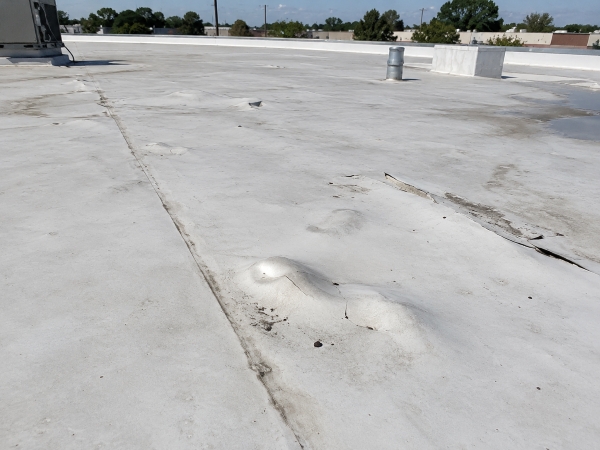
Commercial roof maintenance in Sioux Falls, SD should follow the condition of the roof, the roofing system, drainage, repair history, rooftop traffic, and any written maintenance requirements that apply. Hoppe Roofing has served commercial properties across South Dakota, Iowa, and Minnesota since 1977 and provides maintenance, inspection, repair, coating, and other commercial roofing services.
Spring and fall can be useful checkpoints for a Sioux Falls maintenance plan because they bracket winter and summer weather, but no single schedule fits every building. The best routine defines what will be checked, what minor upkeep is included, what findings require a separate repair scope, and when an extra review is justified by a leak, visible damage, rooftop work, drainage change, or a specific severe-weather concern.
What Commercial Roof Maintenance Includes

Maintenance should be more than a quick walk across the roof. A useful visit can include:
- Roof surface: visible punctures, splits, worn areas, coating changes, or other surface deterioration appropriate to the installed system.
- Seams and laps: separation, movement, or other changes that deserve closer evaluation.
- Flashing and penetrations: walls, curbs, vents, pipes, equipment supports, and roof edges.
- Drainage: drains, scuppers, gutters, low areas, and debris that may interfere with water movement.
- Rooftop equipment and traffic areas: service paths, curbs, penetrations, and areas exposed to regular foot traffic.
- Previous repairs: patched areas and repaired details that should be compared with surrounding materials.
Routine upkeep may include clearing debris or addressing a minor maintenance item when that work is part of the agreed scope. Larger defects should move into a defined repair scope instead of being treated as ordinary maintenance.
What a Spring Maintenance Visit Can Focus On
Spring is a practical time to compare the roof with its condition before winter. Snow, ice, freezing temperatures, and seasonal movement can affect drainage, seams, flashing, rooftop equipment, and access areas, but the presence of winter weather does not prove that damage occurred.
A spring review can focus on drains and low areas, seams and flashing, visible membrane or coating changes, roof edges, penetrations, and previous repairs. If interior staining, damp areas, or new leak reports appeared during winter, those observations can help narrow the investigation.
Visible roof defects or interior symptoms can indicate water entry, but they do not show how far moisture has moved within the roof assembly. If concealed moisture could affect the repair or restoration decision, additional investigation may be needed before the scope is set.
What a Fall Maintenance Visit Can Focus On
Fall can be useful for clearing debris and reviewing drainage before freezing conditions arrive. Drains, scuppers, gutters, corners, and low areas should be checked so leaves or other material are not left to obstruct water flow.
This is also a useful time to review seams, flashing, penetrations, roof edges, and repairs completed earlier in the year. If a condition is stable, it may simply remain on the maintenance record. If it has worsened, a separate repair scope may be appropriate.
A fall visit should not be treated as an automatic coating or replacement trigger. Larger decisions should follow the roof’s actual condition, moisture, substrate, drainage, compatibility, and repair history.
When an Extra Roof Review Makes Sense
An additional review may be appropriate outside the normal maintenance schedule when there is a specific reason to suspect the roof has changed. Examples include:
- A new leak or interior stain
- Visible membrane, flashing, edge, or equipment damage
- Substantial rooftop work by HVAC, electrical, or other trades
- A drainage change or recurring water accumulation
- A severe weather event that appears to have affected the building
Not every storm requires an automatic service visit. The decision should consider the storm, the building, observed conditions, and the roof’s known vulnerabilities.
Drainage Needs Its Own Follow-Up
Recurring water accumulation should be documented, but maintenance should not assume that debris is the only cause. Low areas, settlement, slope, outlet elevation, or other building conditions may contribute.
Clearing drains or scuppers can be routine maintenance. If water continues to collect after outlets are clear, the contractor should explain whether a separate drainage or repair scope is needed.
Maintenance, Inspection, and Repair Are Different
Maintenance is planned care for a serviceable roof. A more detailed roof inspection in Sioux Falls may be appropriate when a leak source is uncertain, broader damage is suspected, or the owner needs a current condition assessment.
Repair addresses a specific defect that requires corrective work. Hoppe’s flat roof repair services cover problems that move beyond routine upkeep. Keeping these scopes separate helps the owner understand what is included in a maintenance visit and what needs a separate proposal.
When a Coating May Enter the Discussion
A roof that remains a suitable restoration candidate may be considered for flat roof coatings, depending on moisture, substrate condition, adhesion, drainage, compatibility, and the repairs needed before coating.
A coating should not be treated as a substitute for removing wet materials, correcting failed flashing, repairing unstable substrate, or resolving drainage problems. Maintenance records can help show whether conditions are stable, recurring, or spreading before a restoration decision is made.
Document What Was Observed and What Comes Next
A useful maintenance record can note the date, areas reviewed, observations, work completed, unresolved conditions, and recommended follow-up. Photographs may be part of the agreed documentation, but building owners should confirm what the maintenance service actually includes.
These records can help with budgeting because they show how conditions change over time. They may also provide useful background if an insurance or warranty question later arises, but the actual policy or written warranty terms control what documentation is required and what coverage applies.
One Building or a Portfolio
Hoppe Roofing states that its maintenance programs can be set up for one building or a portfolio of properties. For multi-building owners, the value is consistency: each roof can be reviewed under a defined scope while still allowing the schedule and repair priorities to reflect that roof’s condition.
Property managers should confirm how buildings are grouped, what documentation is provided for each roof, and how separate repair recommendations are handled.
Commercial Roof Maintenance in Sioux Falls, SD
Hoppe Roofing provides commercial roof maintenance and related roofing services for properties in Sioux Falls and across the region. A useful maintenance routine should match the roof system, drainage, condition, repair history, rooftop activity, and written requirements that apply to the building.
Building owners can also review Hoppe’s Sioux Falls commercial roofing services when planning maintenance, inspection, repair, coating, or other roof work.
Frequently Asked Questions
How often should a commercial roof in Sioux Falls receive maintenance?
The interval should reflect the roof system, current condition, repair history, rooftop activity, weather exposure, debris, and any written maintenance requirements rather than one fixed schedule.
What is the difference between roof maintenance and roof repair?
Maintenance is planned care and condition review for a serviceable roof. Repair addresses a specific defect that requires corrective work under a defined scope.
Should a commercial roof be checked after every storm?
Not necessarily. An extra review is most useful when the storm, visible conditions, leak reports, or known roof vulnerabilities give the owner a specific reason to suspect damage.
Can roof maintenance help with long-term planning?
Yes. Consistent records can show which conditions are stable, recurring, or worsening, which helps owners plan repairs, restoration, or replacement based on the roof’s actual condition.