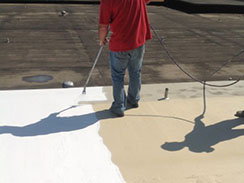
Roof coating is one of the most cost-effective ways to restore and protect a commercial roofing system, but only when the application is done correctly. Many building owners in Ames, IA choose coating because it avoids full tear-off while extending the life of their roof. However, when a roof coating fails early, the cause is almost always rooted in preventable installation errors.
Get the highest ROI from your commercial roofing investment with Hoppe Roofing. Call (855) 472-4932 today and schedule your consultation.
When Roof Coating Fails Early
Understanding the issues behind roof coating failure helps owners know what to look for before approving any coating project.
Poor Surface Preparation
A roof coating is only as strong as the surface it is bonded to. One of the most common causes of failure is inadequate cleaning or prep. Dirt, oils, loose debris, wet insulation, and deteriorated membrane areas prevent the coating from fully adhering.
Commercial roofs often accumulate years of grime, biological growth, and loose particles. If these contaminants are not removed through proper pressure washing and cleaning, the coating begins peeling or blistering long before its lifespan is reached. Any reputable contractor should perform adhesion tests and ensure a clean, dry, and stable surface before application.
Trapped Moisture
Moisture is the hidden enemy of every coating project. Even small amounts of trapped water under the membrane or within insulation create vapor pressure when heated by the sun. This pressure causes blistering, bubbling, and eventually separation.
Iowa’s climate adds additional challenges, with dew, humidity, and cool nights that slow dry time. A proper moisture survey and thorough dry-out period ensure the roof is ready for long-term coating performance.
Incorrect Coating Thickness
Each coating system requires a specific thickness to provide UV resistance, waterproofing, and elasticity. Applying too thin a layer leads to early wear, cracking, and reduced reflectivity. Applying too thick a layer can trap solvents or moisture, which slows curing and reduces adhesion.
Commercial roofs in high-sun environments need precise measurements to protect against UV degradation. Using a wet mil gauge throughout the project ensures the coating is installed exactly as the manufacturer intended.

Substrate Incompatibility
A roof coating must match the surface it is being applied to. Not all coatings bond well to all roof types. Silicone, acrylic, and polyurethane each have specific strengths and limitations.
Common incompatibility issues include:
- Applying acrylic on roofs with ponding water
- Applying silicone over a surface without primer
- Coating over a membrane with existing release agents or residue
Without proper evaluation, the coating may peel, wrinkle, or separate early.
Seams and Penetrations
Even when the field of the roof is coated correctly, seams and penetrations can still fail. HVAC curbs, flashing, fasteners, drains, and vents require reinforcement before coating. Without fabric or mastic to strengthen these areas, the coating becomes the only barrier against movement and expansion.
Most premature leaks occur at these roof transitions. A careful contractor reinforces every seam and penetration to ensure these points remain watertight.
855-472-4932
Weather and Application Timing
Temperature, humidity, and wind directly affect coating performance. Applying the material too early in the morning can trap dew. Applying too late in the day can prevent full curing. Wind can blow debris into wet coating. Sudden rain can wash uncured coating away.
A professional will monitor weather windows carefully, ensuring that each layer has full time to dry and bond before exposure.
Choosing the Right Contractor Prevents Most Failures
Early roof coating failure is rarely the coating’s fault. The biggest factor is workmanship. Building owners in Ames benefit most when partnering with a contractor who performs detailed inspections, moisture checks, adhesion testing, surface repairs, primer application, and controlled installation. When done correctly, a roof coating becomes a long-term investment rather than a short-term fix.
Call Hoppe Roofing for Expert Roof Coating
If you want reliable protection instead of early failure, Hoppe Roofing delivers roof coating solutions built to last. Our team evaluates your roof carefully, addresses all prep work up front, and applies coating systems according to exact manufacturer specifications.
Serving Ames, Nevada, Boone, Ankeny, and surrounding communities, we help commercial building owners get maximum value from their roofing investment. Contact us today at (855) 472-4932 to schedule an inspection or request a coating evaluation.
FAQ
How long should a commercial roof coating last?
Most professionally installed coatings last 10–20 years depending on system type, thickness, and maintenance.
Can any commercial roof be coated?
Not always. Roofs with saturated insulation, severe structural damage, or heavy ponding water may need repairs before coating.
Does roof coating stop leaks?
Yes, when applied correctly and reinforced at seams and penetrations. Existing damage must be repaired prior to coating.