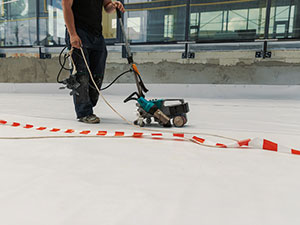
A commercial roofing contractor must account for regional climate conditions when planning roofing systems, especially in areas like Waterloo, IA, where weather patterns place unique demands on commercial buildings.
At Hoppe Roofing, we work with property owners throughout Waterloo, Iowa, to evaluate how snow, wind, temperature changes, and precipitation affect roofing performance. If you have questions about roofing system planning, you can contact us at 855-472-4932. Understanding how a commercial roofing contractor designs roofs for Iowa weather helps building owners see why climate-specific planning is essential.
How A Commercial Roofing Contractor Plans for Iowa Weather
Commercial roofing systems are not designed in isolation. Each roof must function as a complete system that responds to environmental stress while protecting the structure below. Iowa’s climate introduces challenges that require careful material selection, attachment methods, and drainage design.
Understanding Iowa Climate Stress Factors
Before selecting materials or systems, a commercial roofing contractor evaluates the environmental forces the roof will face. In Iowa, these factors include:
- Heavy snow accumulation during winter
- Freeze thaw cycles that cause material movement
- High winds associated with seasonal storms
- Spring and summer rainfall that tests drainage capacity
- Temperature swings that affect expansion and contraction

Each of these elements influences how roofing systems are planned and installed. Ignoring even one factor can lead to premature roof failure.
Snow Load And Structural Planning
Snow load is a major concern for commercial roofs in Iowa. Accumulated snow adds weight to the roof structure and can stress materials if the system is not properly designed.
A commercial roofing contractor evaluates snow load by considering:
- Roof slope and ability to shed snow
- Structural capacity of the building
- Insulation compression resistance
- Membrane or surface durability under prolonged weight
Lightweight roofing systems are often preferred to reduce overall load. Proper insulation selection helps prevent compression that can compromise drainage and thermal performance.
Freeze Thaw Cycle Management
Freeze thaw cycles occur when temperatures fluctuate above and below freezing, often within short timeframes. These cycles cause roofing materials to expand and contract repeatedly.
A commercial roofing contractor plans for this movement by:
- Selecting flexible roofing membranes
- Designing expansion accommodation at seams and penetrations
- Using attachment methods that allow controlled movement
- Reinforcing flashing details where stress is highest
Without these considerations, cracks, seam separation, and moisture intrusion can develop over time.
Wind Resistance and Uplift Protection
High winds place upward pressure on roofing systems, particularly on low slope commercial roofs. Wind uplift can loosen materials and expose weak points if attachment methods are inadequate.
To address this, a commercial roofing contractor evaluates:
- Building height and exposure
- Roof edge and corner zones
- Local wind speed requirements
- Appropriate attachment strategies
Attachment methods may include fully adhered systems, mechanically attached systems, or hybrid approaches designed to resist uplift forces common in Iowa storms.
Drainage Design for Heavy Rain and Snowmelt
Proper drainage is critical for preventing water accumulation. In Iowa, roofs must handle both heavy rainfall and large volumes of snowmelt during seasonal transitions.
Drainage planning includes:
- Correct roof slope design
- Adequate number and placement of drains or scuppers
- Overflow protection to prevent structural stress
- Clear drainage paths to reduce ponding
A commercial roofing contractor ensures drainage systems are designed to move water efficiently off the roof before it can refreeze or cause membrane deterioration.
Material Selection Based on Climate Performance
Not all roofing materials perform equally under Iowa weather conditions. A commercial roofing contractor evaluates materials based on flexibility, seam strength, moisture resistance, and durability.
Material considerations often include:
- Cold weather flexibility
- Resistance to UV exposure during summer months
- Seam integrity under thermal movement
- Compatibility with insulation systems
The goal is to select materials that maintain performance across all seasons rather than excelling in only one condition.
Long Term Performance with a Commercial Roofing Contractor
Roof planning does not end at installation. A commercial roofing contractor also considers how the roof will be maintained and inspected over time.
Long-term planning includes:
- Access for inspections and maintenance
- Protection of seams and flashings
- Drainage maintenance strategies
- Monitoring areas prone to wear
This proactive approach helps extend roof lifespan and reduces unexpected repairs.
Expert Commercial Roofing Contractor
Planning roofing systems for Iowa weather requires technical knowledge, experience, and climate awareness. At Hoppe Roofing, we help property owners in Waterloo, IA, understand how a commercial roofing contractor designs systems to withstand snow, wind, and temperature extremes. If you would like to learn more about roofing system planning or have questions about your building, contact Hoppe Roofing at 855-472-4932.
FAQ
Why does Iowa weather affect commercial roofing design?
Snow, wind, and freeze thaw cycles place stress on roofing materials and structures.
How does a commercial roofing contractor plan for snow load?
They evaluate roof slope, insulation strength, and structural capacity.
What role does drainage play in Iowa roofing systems?
Proper drainage prevents ponding water and refreezing damage.
Is wind resistance important for commercial roofs in Iowa?
Yes, strong winds can cause uplift and material failure without proper attachment.